By Gary Ampulski, Midwest Genesis | June 14, 2016
When it comes to selling a business, many advisors make a point of how business valuation plays a key role in establishing what a seller might expect from a sale transaction. But just as there is more to determining value than a valuation, there is more to achieving a satisfying experience than getting a good price, structuring acceptable deal terms, and minimizing taxes. On the buy-side, there are obvious factors like investment hurdle rates, financial projections, “add-backs” to profits, future economic conditions, availability and cost of funding, etc. that play a role in developing a purchase offer.
But no less important than these “hard” components of an acceptable deal are the softer sides of a transaction. Buyers include conditions like the strength of the management team, the culture that dictates how the business is expected to operate in the future, the strategy for future development, and the challenges of integration.
If not considered long before the negotiation process, these “soft” elements in a sale process can create significant gaps that are difficult to bridge.
Buyers view these softer factors as risks that can take considerable time to understand and manage. They require judgment and often influence the discount rates that are applied to calculate a net present value of the business. Consequently, they are a critical part of a resulting offer.
As a seller, it’s helpful to understand what these risks are and how they influence an offer in order to minimize them before engaging in a sale process.
On the sell-side, experienced M&A advisors know that an owner can have a strong personal connection to their company. Jim Afinowich from M&A advisory firm IBG Fox & Fin Financial Group likens this situation to parenting: “nurturing the company though sleepless nights, protecting it from threats, helping it recover from illness, constantly leading and nudging it in the right direction, and preparing it to survive without them.” This helps explain the emotional attachment and out-of-character reaction owners can have to the sale process. It’s not just a source of an owner’s income and wealth; it is frequently a major source of their identity and purpose. Successfully separating from these connections can mean the difference between a very satisfying or disappointing transaction experience.
Building and selling a solid company requires successfully accomplishing several key business development stages. Each stage takes more and more financial and emotional currency and comes with increased attachment. Being able to deal with this attachment and separate from the business can mean the difference between satisfaction and disappointment for everyone involved. The degree to which sellers can judge how well they have accomplished these stages is ultimately measured by the fitness for the business to grow in the hands of a new owner. Therein lies the true value for the buyer.
Ownership Business Development Stages
- Conception
- Formation
- Establish Core Values
- Feed, Nurture, Protect
- Build Management Team
- Reduce Future Risk
- Separation
- Transition Out
A fulfilling transaction may have nothing whatever to do with what a buyer is willing to pay or the amount of financial return garnered by the seller. The real ROI takes into account all the conditions for satisfaction, many of which are mutually exclusive to the financial considerations a buyer brings to the table. They encompass benefits for both the business and the seller. They involve resources that can generate future success for employees, customers, suppliers and the local community under new ownership as well as opportunities for the seller that contribute to a satisfying life after the sale. The key is knowing what they are, who controls them and how they can be realized.
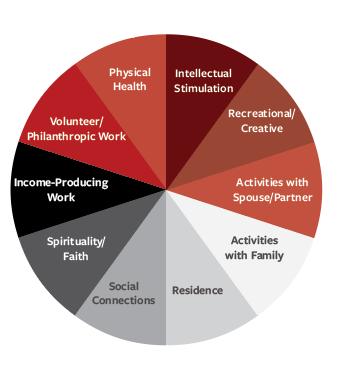
The Successful Transition Planning Institute has developed a framework with ten areas that owners need to address to minimize their unconscious sabotage of the deal – and make sure they have a life they can’t wait to live on the other side.
Even if there isn’t a pending retirement in the near future, these psychological, emotional, intellectual, lifestyle and even spiritual factors can influence the seller’s state of mind in a very subtle way. Ignoring or minimizing the impact of any one of these “soft” factors can cause a deal to blow up at the last minute.
Peter Drucker in his book "Managing Oneself" points out that the one prerequisite to successfully managing separation from a business and transitioning to life after a sale is that “you must begin working on it long before you enter it.” Lee Iacocca, former CEO of Ford Motor Company and retired CEO of Chrysler, said; “You plan everything in life, and then the roof caves in on you because you have not done enough thinking about who you are and what you should do with the rest of your life.”
If not adequately addressed, the soft sides of sale can generate a very hard and disappointing gap in the value and ultimate satisfaction expected from a transaction.
For additional information regarding Florida business sales, acquisitions and valuations, please contact Eric J. Gall at
Eric@EdisonAvenue.com or 239.738.6227. Also, visit our Edison Avenue website at
www.EdisonAvenue.com or my personal website at
www.BuySellFLbiz.com.