Showing posts with label business acquisition. Show all posts

Tuesday, July 25, 2017

Article Summary: 3 Tweaks to Improve Your Corporate Development Strategy | Axial


By  | 


I've pared down this article to it's key points.  If you would like to read the entire article click on the link at the bottom of this summary -- Eric Gall

The acquisition market is very competitive.
Corporate development teams must continually connect with both CEOs and intermediaries to cover the market and get access to quality deals. 
Here are 3 strategies to supercharge your corporate development strategy: 

1. Play the long game.


  • Demonstrate an interest in partnering with potential targets, rather than simply buying them. 
  • It is a buyers market; therefore, sellers’ expectations are inflated.
  • Sellers look to start a relationship with corporate development teams 3 to 18 months before an acquisition. 
  • CEOs aim to show acquiring companies their progress, give them time to recognize value, and to confirm that they are selling to the right buyer.
  • Diligence identifying and connecting with companies before they go to market will prove advantages.

2. Flip the script.


  • If investment banker calls your company to see if you’re interested in selling, flip the script.
  • Inform the banker your aren’t looking to be acquired, but looking for acquisitions.
  • The banker may have a deal fitting what you’re looking for.
  • Get to know the gatekeepers -- investment bankers are key to unlocking proprietary deal flow.

3. Think scalability.


  • Wherever there is marketplace dispersion, increased interconnectedness will accelerate efficiency and reduce costs, e.g., AirBnB for sublet market, or LinkedIn for job market. 
  • Deal platforms deliver access to a large number of deals across a wide quality spectrum,
  • Online deal platforms make sure you never miss a deal in your networkand offer tools to canvass micro-industries and niches previously too expensive to cover. Teams gain access to a wide range of opportunities and improve their corporate development strategy. 
Article LINK

For additional information regarding Florida business sales, acquisitions and valuations, please contact Eric J. Gall at Eric@EdisonAvenue.com or 239.738.6227. Also, visit our Edison Avenue website at www.EdisonAvenue.com or my personal website at www.BuySellFLbiz.com.

Wednesday, June 28, 2017

Article Summary: 7 questions to ask before buying a business | CNBC

Kayleigh Kulp, 
Source: RazzleDazzle Barbershop.
  • Now is a great time to buy an existing business. You can capitalize on a loyal customer base, trained staff and the opportunity for increasing cash flow in this post-recession environment.
  • Purchases of small businesses are among their highest levels since BizBuySell.com and BizQuest.com, which together feature 76,000 listings for sale, began tracking them in 2007.
  • Median revenue of sold businesses on BizBuySell in 2015 also grew to $449,462, up from $417,562 in 2014, while the median sales price also increased 7.6 percent to $199,000.
Whether becoming a first-time business owner or acquiring a business to expand your current company, ask the following questions before signing on the dotted line:


1. Will demand exist for the business' products and services for years to come?  Make sure the business is profitable, has a competitive advantage and is not a fad.
2. Are there holes in the financials?  Due diligence should include a thorough review of bank statements, profit & loss statements, contracts, lease agreements and tax returns.


3. Am I just in this for the money?  Think long-term.
4. Do I really want to do this all day?  Business ownership isn't a passive investment.  You will need to be present to ensure success.
Source: Brandi Simons
5. What is the best way to finance this?  SBA loans and seller financing are the commonly used options.

6. Why is the seller selling?  Ask the seller what they would do differently if they stayed on.

7. Is the company's success tied to the owner?  If yes, you may want to keep the owner on to ensure successful handoff of clients.

Article LINK

For additional information regarding Florida business sales, acquisitions and valuations, please contact Eric J. Gall at Eric@EdisonAvenue.com or 239.738.6227. Also, visit our Edison Avenue website at www.EdisonAvenue.com or my personal website at www.BuySellFLbiz.com.

Thursday, June 22, 2017

Article Review: Advice for Buying a Business in a Small Town | FinanceTownhall.com

Cliff Ennico | Feb 10, 2016
Eric Gall:  I believe there are some good bits of advice in the bottom half of this article beyond normal financial due diligence.  I've highlighted them in red text.

The author was looking to buy a business he could work with his college graduate daughter who he expected would eventually take over and run the business full-time.
He found a hardware store in a small town an hour away with 50 year's history and financials compiled by a reputable accounting firm.
The Seller accepted the author's offer; however, they refused to disclose if there were hidden liabilities or if their equipment and inventory were in good condition. 
The author recognized the following problems in this transaction:

  • I was not a "local," and therefore do not have local knowledge about the business, the community, and things going on there.
  • Financial statements show how the business performed historically. They say nothing about how the business will perform in the future.
  • There may be things happening in the community that will change the way the business will perform after acquiring it and the seller is under no legal obligation to tell you.
Here are the sorts of questions you need to ask:

  • Is a major competitor (such as Lowe's or Home Depot) moving into town?
  • Is a major corporate employer moving out of town and destroying the tax base?
  • Are the town's demographics changing in a way that won't favor a family-owned hardware store?
  • Is the DOT shutting down the road going by the store for major improvements?
  • Is the town changing its zoning laws so that the store will become a "nonconforming use" and difficult to sell to someone else?
If you do decide to buy a business on the seller's terms here are three things you need to do.

  • Hire a Good -- Local -- Accountant or Lawyer. You need to work with a local resident who can answer some of these questions, someone who's been around a long time.
  • Spend time in town. Spend a couple of weeks in the town, chatting up locals, read the local newspapers, and find out if things are happening that will affect the business.
  • Contact the local Police Department first and make sure they know what you are doing.
Article LINK

For additional information regarding Florida business sales, acquisitions and valuations, please contact Eric J. Gall at Eric@EdisonAvenue.com or 239.738.6227. Also, visit our Edison Avenue website at www.EdisonAvenue.com or my personal website at www.BuySellFLbiz.com.

Tuesday, June 6, 2017

Article Review : Middle Market Lenders Claw for Corporate and Sponsored Deals in Uncertain Climate | Axial

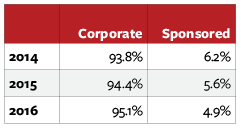
Per Axial data, sponsored (private equity) vs. corporate deal flow has remained fairly consistent over the past three years.
0517_LendersSeek_Table (1)
Sponsored deal flow has been spread evenly geographically with heavier activity in California, Texas, Florida and New York.

0517_SponsoredUSDebtDeals
Here are thoughts of three lenders regarding sponsors vs. corporations:

What’s the difference from your perspective when working with sponsors vs. corporations on a deal?george
“With sponsors, the positive is you’ve had someone who has probably already asked all of the right questions, therefore you can get very quick responses. That way it’s all packaged with a bow on it.
On the corporate side or the non-sponsor side, there is just a much heavier lift. It requires a high level of access to the business owner. I think there is also a large part of the market, on the non-sponsor side, that maybe doesn’t understand yet the total value proposition of this type of financing product. The company still might be of the mindset to call a budge bracket investment bank for an acquisition financing or my local bank down the street.”
– George Mueller, KKR Credit Advisors

What’s one factor that’s key to success in both both types of deals?gregg
“Aligning interests. The best thing about working with sponsors is that they are sophisticated and they are motivated. The worst thing about working with sponsors is that they are sophisticated and they are motivated. Because of that, we always strive for alignment of interest.
When you are lending to a non-sponsor, such as a family business, the business might have a 20 or 30 year orientation, which might not match with the lender’s shorter term orientation. In these situations, alignment is also of utmost importance.”
– Gregg A. Bresner, CION Investment Management


What’s your advice for sponsors and corporations when communicating with lenders? phil
“Behind every credit committee meeting, every credit memo, every credit approval or decline, every credit covenant and every credit agreement are human beings. Fostering good relationships with those human beings requires effort, consistency, communication and time, but fostering good relationships with your lender is always a good long-term strategy for every business owner, CEO, and CFO.
The most important thing for non-sponsored businesses to do is provide good financial reporting. They can avoid surprises by taking the time to regularly communicate and meet with the decision makers at the bank on a regular basis.”
– Phil Kain, Rush Street Capital

For additional information regarding Florida business sales, acquisitions and valuations, please contact Eric J. Gall at Eric@EdisonAvenue.com or 239.738.6227. Also, visit our Edison Avenue website at www.EdisonAvenue.com. To search for Florida Businesses for Sale: CLICK HERE

Tuesday, March 28, 2017

Selling? Look for a Buyer Who’s Walked a Mile in Your Shoes | Axial

By , Axial | 

In 1996, Sheng Yen and Nellie Lin acquired a sandal manufacturing company called Flojos from a family in Guadalajara, Mexico and moved the business from San Diego to Thousand Oaks, California.
Under the Lins’ leadership, Flojos — best known for its iconic criss-cross rubber sandals — expanded its product lines to include leather, sport, and fashion sandals for both men and women. The husband and wife team increased Flojos’ gross sales by more than 5x — from less than $4 million in 1997 to $20 million in 2015.
After two decades at the helm, Nellie and Sheng Yen began exploring their options to retire and exit the business.
Thanks to an introduction from their attorney, the Lins engaged Dave Richards of Keystone Business Advisors as their M&A advisor. Richards had twelve years of experience in helping business owners exit and had previously worked with consumer goods companies like Petunia Pickle Bottom and Koolaburra. Together, Richards and the Lins embarked on the process of finding the best buyer for Flojos.

Walking Before Running

Jake Maki, 12-year-old professional surfer and part of Team Flojos.
Like most businesses approaching a sale, Flojos needed to get their financial house in order. “We worked extremely closely with the accounting team to do some financial recasting and prepare the business for going to market,” says Richards.
Richards and the Lins spent many hours organizing financial, operational, and legal documents to create an offering memorandum and a summary, or teaser, for the business.
Many of Flojos’ accounting practices were out of date. Contracts with suppliers, vendors, and customers were incomplete or missing. “We had to rectify the fact that most of their agreements, including those with customers and contract manufacturers, had been completed on a handshake basis,” says Richards.
Richards also helped the owners consolidate two sets of books into one financial statement and transfer hand-written accounting ledgers to digital records. “This posed some challenges for creating the teaser and added a lot of extra time to get through due diligence,” recalls Richards.

Stepping into the Market

Once the teaser was ready, Richards began reaching out to potential buyers. To ensure a competitive process and the best possible outcome for the owners, he cast a fairly wide net. In addition to approaching strategic and financial buyers he’d encountered in previous deals, Richards used Axial to research and engage other potential acquirers outside his personal network.
A few months later, Flojos had five serious prospective buyers: a strategic acquirer who had a manufacturing operation in China and wanted access to broader distribution in the US, two search funds (one of which had an operator with relevant industry experience), and two private equity groups.

Sizing Up the Competition

Each buyer brought a diverse set of strengths to the table, ranging from strong financial backgrounds to operational expertise.
20161108_233431
Newly appointed CEO of Flojos and footwear industry expert John Dickinson in China during the due diligence process.
Throughout the courting process, the Lins had given careful thoughts to their retirement plans and their goals for the future of the business. “The most important things to the sellers in evaluating the potential buyers were price and terms, the buyer’s likelihood of continuing the legacy of the business successfully, and the buyer’s likelihood to actually get the deal done,” says Richards. Based on these priorities, The Courtney Group, a private equity firm based in Newport Beach, CA, quickly rose to the top of the buyer list.
The firm, led by President & CEO Tom Courtney, aggressively pursued the opportunity after Richards invited him to confidentially review the deal on Axial.
The Courtney Group has completed 20 investments, but had not invested in a footwear or apparel business. However, Courtney had a special interest in the consumer sector after getting to know footwear, apparel, and action sports industry executive John Dickinson.
Dickinson has 25 years of operating experience building brands including Maui and Sons, Vans, Candie’s, Globe International, and Authentic Brands.
“Having been in the industry for a long time, I knew Flojos had been very quietly doing good business, so I was definitely intrigued,” says Dickinson. Courtney and Dickinson decided to pursue the Flojos deal together, with The Courtney Group as the lead financial sponsor and Dickinson as the new CEO.
In the meantime, the prospective buyer list had shrunk from five to two: The Courtney Group (alongside Dickinson) and the other private equity firm. Since the two firms presented very similar financial offers, the Lins looked to other factors to determine who would be the final buyer.

A Foot Above the Rest

During management meetings, Dickinson and Courtney’s clear vision for the future of Flojos made a strong impression on Richards and the Lins.
“Keeping the brand integrity intact is very important to us,” says Dickinson. Flojos is already being sold by national and independent retailers, but Dickinson saw a lot of untapped market potential.  “I felt like Flojos could really benefit from some back-to-basics marketing,” says Dickinson. In his meetings with Richards and the Lins, he articulated concrete ideas to tell the brand story at the retail level, including shelf placement, contests, window advertising during back-to-school time, and more.
He and Courtney also shared their vision for expansion into international markets, which currently only account for about 9% of Flojos revenues. (Dickinson has experience in this realm too — he’s run similar businesses where international sales have accounted for 50% of revenues.)
“It became clear that they could make an impact on the business by doing things like introducing a closed-toed shoe line to help Flojos sales through the winter months,” says Richards. “John and Tom knew how to get the financing and were able to offer a fair and competitive price, but more important, they brought a lot of passion and expertise to the table.”

Moving Forward

After about two months of due diligence, the Lins decided to move forward with The Courtney Group and Dickinson. After the letter of intent was signed, The Courtney Group hired accounting firm Traverse LLC to perform a quality of earnings report and involved their legal team at Morrison Cohen to perform legal due diligence. The Courtney Group then arranged its financing with a senior term loan and revolving line of credit with Kansas City-based Academy Bank, subordinated debt and equity from C3 Capital (also of Kansas City), and purchase order financing and accounts receivable financing from Rosenthal & Rosenthal of New York and California.
The due diligence period lasted two months, during which time Courtney, Dickinson, and Sheng Yen Lin traveled to China together to observe and vet the manufacturing process at the company’s factory there.

Flojos agents, Sheng Yen Lin, John Dickinson and Tom Courtney at the end of the due diligence trip in China.
“While in China, it became clear that John knew what he was looking for in the supply chain process, because he had done it all before. Another buyer would have asked novice questions. I think that experience meant a lot to the seller,” says Richards.
The Courtney Group and Dickinson announced their acquisition of Flojos in January 2017.
For the Lins — who were ready for retirement but eager to see their business continue to flourish — one of the keys to securing such an ideal outcome was engaging a high-quality advisor early in the process. Richards’ commitment to preparing the business for sale well in advance of going to market, as well as identifying credible buyers beyond his personal network, enabled them to meet Courtney and Dickinson and move forward with the deal. Now, Flojos has the opportunity to maintain its brand heritage and grow with a great financial partner and industry-veteran CEO in place.
Flojos is the first closed deal The Courtney Group has sourced through its Axial membership. “Even though Dave Richards at Keystone Business Advisors is in Thousand Oaks, CA, just a two hours down the road from our firm in Newport Beach, we didn’t know each other,” says Courtney. “It’s a perfect example of how Axial is using its data and software to make highly valuable connections between entrepreneurs and the investment community.”

For additional information regarding Florida business sales, acquisitions and valuations, please contact Eric J. Gall at Eric@EdisonAvenue.com or 239.738.6227. Also, visit our Edison Avenue website at www.EdisonAvenue.com.

Tuesday, March 21, 2017

Top 5 Things to Know About Terms and Conditions for SBA Loans | Axial

By , The DVS Group | 
Recently, we shared our top 5 tips for navigating SBA financing for acquisitions, including picking the right bank and what to expect during the process.
In this article, we’ll share five things anyone considering acquiring a business should know about terms and conditions for SBA loans. There are certain things the SBA requires and others that they don’t allow. Being realistic about the terms and conditions is a good first step to increase your chances of success with SBA financing.
As always, seek out professionals — financial advisors, attorneys, bankers, and/or M&A advisors — who have expertise in this area when seeking a loan. They can help you work through the kinks and oddities of structuring an SBA deal.

1. Expected Rates and Terms

SBA loans offer interest rates at a maximum of 2.75% over prime. The rate floats for most loans and adjusts quarterly. You can get up to 10 year terms (amortization) for growth capital and/or business acquisitions. Terms are longer for real estate and certain kinds of equipment. Your loan officer should explain how to adjust and/or blend amortization to get the best loan for your situation.

2. Coverage Ratio

Calculate coverage ratio as the sum of debt payments and estimated taxes due, divided by the EBITDA of the business. Banks are generally satisfied with a debt service coverage ratio of 150%. You could go lower in certain circumstances, e.g., if the bank is hungry, you have a lot of collateral, etc. But plan to hit 150% to make life easier.

3. Collateralization

You don’t need to have 100% collateralization of the loan using your business and personal assets. A coverage ratio over 150% can and should make up for your lack of assets to pledge against the loan. We’ve done deals with service businesses with fewer than $500K of assets on the balance sheet that were able to borrow several million dollars of term debt because of the experience of the borrower and their cash flow coverage. That said, every bank is a bit different in what they can do, and collateral matters more to some than others.

4. Buydowns

Buydowns aren’t an option with SBA loans. The SBA wants you to take it all right away or not at all. A one-hundred percent buyout of the owner is required. Whatever amount is owned, you have to buy all of it. An owner can’t go from 50% ownership down to 5% ownership.

5. Balloons and Earnouts

These creative options would be nice, but neither are allowed in SBA lending. The standard operating procedures can be found here (they’re hefty, so find your bifocals). Here’s a secret: inventive ways around these limitations are found all the time. For example, you can use an escalating interest rate on seller financing to incentivize repayment on or prior to a significant increase in rate; this can substitute for a balloon or bullet requirement that is otherwise not allowed.

For additional information regarding Florida business sales, acquisitions and valuations, please contact Eric J. Gall at Eric@EdisonAvenue.com or 239.738.6227. Also, visit our Edison Avenue website at www.EdisonAvenue.com.

Wednesday, February 22, 2017

17 Common Questions Investors Ask Owners | Axial

By , Axial | 
Every investor has a list of qualifying questions they ask when introduced to a CEO or business owner for the first time. It goes without saying that you should be prepared to have a detailed discussion around the business model, organization, financials, and growth picture of the company.
In addition to this baseline information, investors may use the first couple of meetings or calls to develop a fuller picture of the business and begin to identify both the unique risks and advantages of investing in your company.
We’ve compiled some of the most common questions investors say they ask in the first 1-2 meetings with CEOs to help you prepare as you begin to market your business, and more importantly, yourself, to potential investors and buyers.
On Business Operations:
  1. What is your relationship with your suppliers?
  2. What is your customer/payor mix?
  3. How are decisions being made internally?
  4. How are business strategy plans made, executed and outcomes analyzed for improvement?
  5. Explain your  research and development process (if applicable).
  6. Who is part of your team? Explain their roles and contribution and the investment you’ve made in the team and talk about team dynamics.
On Business Risks:
  1. What has been your biggest misstep as a company?
  2. What economic/macro trends have worked against you in the past?
  3. What are your competitors doing better than you?
  4. Is there any seasonality or predictable variability in demand for your product/goods/services?
  5. Are there any pending litigation, Medicare claims, lawsuits, etc.? What are the details if any?
On Your Motivations:
  1. What are your primary goals in exiting? (E.g., maximize price, retain a majority/minority ownership, etc.)
  2. What are your primary goals in finding a financing partner for your business? (E.g., ensure your company’s legacy, take care of your employees, maximize price)
  3. What do you stand to lose by not completing this transaction?
On the Transaction Process:
  1. What is your timeframe?
  2. Do you plan on remaining with the company post-transaction?
  3. Have you already been approached by, or are you already in discussions with, other investors or buyers?
Remember that in addition to asking questions directly, investors will also be sizing you up by your behavior. According to Brent Beshore, Founder and CEO of private equity firm adventur.es, “There have been several instances in which we’ve dialed in to a scheduled call [with a CEO], just to be asked, “What firm are you from again?” If we’ve scheduled a management call with you, we’ve put serious time and effort into preparing for that call. If you don’t know at least the baseline facts about our firm, we infer a lot. To put it another way, if you’re not looking into the credibility and perspective of your prospective buyers, there’s a better than fair chance you’re not a viable opportunity. As a side note for sellers, it’s okay to ask us hard questions, too. In fact, we welcome it.”

For additional information regarding Florida business sales, acquisitions and valuations, please contact Eric J. Gall at Eric@EdisonAvenue.com or 239.738.6227. Also, visit our Edison Avenue website at www.EdisonAvenue.com.

Monday, December 19, 2016

When Making an Offer Is the Toughest Part of the Deal | Axial


By , VERTESS | 

Recently, the owner of a healthcare business we represent called me with a plea to help encourage an interested buyer. “The buyer seems like a great fit,” he noted, “but he just can’t produce an offer in writing.”
When I spoke with the potential buyer about his concerns, he said, “It’s not about the money; it’s just the feeling that we’re committed and there’s no going back.” When I told him he could build in good reasons to opt out after a signed LOI, he responded, “That’s the best way I can explain it,” and disappeared.
This is a very frustrating experience many sellers encounter, and it points to the complex thought processes and emotions involved in each transaction.
We all know the objective reasons why potential buyers of any product or service, let alone a multimillion-dollar healthcare company, might walk away from a profitable opportunity without making a specific offer: inadequate capital and/or financing; a poor understanding of the relevant market dynamics; a bad cultural match; a lack of operational synergy; and so on.
But why would a qualified buyer refuse to tender an LOI when the deal has clear strategic value and not one of the above reasons is relevant?
Here are some experience-based observations:
  • Even the most competent buyer can be overwhelmed by a great opportunity for reasons that have nothing to do with the target company. “I can’t wrap my head around the company” is an all-too-common phrase in the healthcare M+A market, even from the lips of a Harvard MBA.
  • The prospective buyer may have significant internal operational problems, including integration concerns, unrelated to the potential acquisition itself. One acquirer told me several months after leaving a deal that “several of my management team members made a ruckus about the acquisition, so I caved in.” The seller had no idea this was an issue and the buyer was “too embarrassed” to tell her the truth.
  • Buyers, like every other person, have personal lives that can affect a potential transaction. This is one of the most human realities that can impact deals … and they’re often invisible to both the seller and the advisor.
Here are three ways you may be able to make the process easier and more productive:
  1. Ask the potential buyer to re-clarify the acquisition goals. This is the same process that many advisors employ to make sure they are aligned with the seller during the transaction process. You may uncover a roadblock or hesitation that wasn’t apparent in the early stages of negotiation.
  1. Break the offer structure into digestible elements. If the acquirer is struggling to make a timely offer it is sometimes helpful to break the offer into its component parts (e.g., sales price, financing, non-compete provision, etc.) so you can determine any specific bases for the buyer’s concern. You may also discover other ways to make it work.
  1. Ask about the problem outright. Of course, the best way may be simply to ask, “What’s the issue?” Most buyers usually appreciate your candor and will remember it in the future.
Sellers and buyers in the marketplace have distinct realities that must be appreciated and anticipated. Sellers agonize over financial planning and selling their “baby,” while buyers fret over future value and how to mitigate risk. Yet when things work right, both experience that sometimes scary, but wonderfully transcendent moment when they both say “yes” and the deal closes.
Transactions may sometimes fall apart for reasons that can’t be fully explained — but as Sir Richard Branson noted, “Business opportunities are like buses; there is always another one coming.”
Article LINK
For additional information regarding Florida business sales, acquisitions and valuations, please contact Eric J. Gall at Eric@EdisonAvenue.com or 239.738.6227. Also, visit our Edison Avenue website at www.EdisonAvenue.com or my personal website at www.BuySellFLbiz.com.

Sunday, December 18, 2016

3 Hidden Factors that Impact Your Business Value | Built to Sell Radio

When you get an acquisition offer, your eye will immediately go to the offer price. That’s only natural. But, there are two other negotiating points that could have just as large an impact on your windfall when selling your business.
Groot discovered the importance of all three when he went to sell JP’s Coffee Shop – a business that USA TODAY® voted one of “Top 10 Coffeehouses in America”.
In Jack Groot’s case, he sold his business to a supplier.
Your supply chain will include natural acquirers adjacent to your business. We’ll help you identify a short list of strategic acquirers during month 11 of The Value Builder System. It all starts with getting your Value Builder Score.
About Jack Groot
Jack grew up in Grandville, lives in Hudsonville, and owned his business in Holland MI for over 20 years. Jack Groot’s entrepreneurial role model was his father, Jake Groot. The family business of homebuilding and developing and selling real estate started in the late 1940s, shortly after Jake emigrated from the Netherlands. Jack credits his father for being a great example of problem solving, thinking outside the box, and how to do customer service. In 1993, Jack founded JP’s Coffee in Holland, named a “Top 10 Coffeehouse in America” by USA TODAY® Travel Destinations. He also created an international coffeehouse and business training school, and was an industry consultant, industry magazine columnist and blogger. After Jack sold his business interests, he returned to his homegrown roots in customer service, buying and selling real estate, as well as consulting for others in business start-up and operations.
Some Highlights of the Show
Business: JP’s Coffee Shop
2:56: A timely dream.
4:00: “Award winning downtown, fabulous location… at that point we were leasing the building.”
4:20: Started the business in 1993 and sold in 2014.
4:46: “1994 saw the first $250,000 in revenue… within five years I had paid off all of my debt.”
6:30: “My goal was to move from working IN my business to working ON my business.”
7:00: “I was no longer needed as it pertained to the operations of the business. My job, it morphed into being a leader.”
7:44: “In 1993, my landlord said to me, “Buy the building, please…” I can’t, so I leased… Five years later I was debt free and ready to purchase… I tried over the next 15 years… until I finally got the building in 2013.”
10:12: The triggering event.
10:50: “My business existed to serve me; I didn’t exist to serve it.”
11:15: “One of my vendors came to me… ‘If you ever decide to sell, I want to be first in line.’”
12:10: “Somebody tried to buy my business… I’m not looking to sell… What do I do?”
12:20: “Jack, whether you sell or not is irrelevant. You must follow this process, improve and learn from this process… Come out better for it.”
14:50: Consulting practice, barista school, industry products – everything, lock, stock and barrel.
16:00: Pre-existing relationship with the vendor built trust as a future acquirer.
19:30: Juice and smoothie bar franchise concept with poor financial performance.
20:45: Words of advice on failure.
21:45: “Large amount of debt resting on the shoulders of the performance of the coffee shop.”
25:40: The valuation range.
27:00: Negotiating the terms without attorneys present.
29:45: “If John sells his business, it accelerates the contract.”
30:40: “Lucrative position with a lot of upside over the next few years.”
30:50: The employment contract.
38:30: leaderization.com

The Value Builder System™
Built to Sell Radio is brought to you by The Value Builder System™ where, our global network of Certified Value Builders™ will help you improve the value of your company by up to 71%. It all starts with getting your Value Builder Score here.

Link to article
For additional information regarding Florida business sales, acquisitions and valuations, please contact Eric J. Gall at Eric@EdisonAvenue.com or 239.738.6227. Also, visit our Edison Avenue website at www.EdisonAvenue.com or my personal website at www.BuySellFLbiz.com.

Sunday, December 11, 2016

5 Facts You Need to Know About Buying an Online Business

David will cover the 5 main reasons why you should buy an online business, including a few reasons we never thought about before.

Ameer Rosic-
 Hey, what’s up everybody, and welcome back to the Growth 48 podcast. If you missed last week episode with Tyler Wagner, go check it out. We talked about how he was able to scale his six figure publishing company in less than one year.


Ameer Rosic- So today’s special guest is David Newel, he’s a brokerage director at the FE International, he started out as an investment banker, he moved online to use his transactional experience for website brokerage. At FE International he spends his time speaking with buyers, executing deals and working on raising industry’s standards to encourage more investments.


Ameer Rosic-In 2014 David closed more than six million dollars in sales and has authored the industry’s leading book on buying Internet businesses for investors.
Ameer Rosic-So in today’s podcast, you’re going to learn exactly the top tips and inside information on what it truly takes to acquire a profitable business. So without further a due, please enjoy today’s podcast with David Newel.
Welcome to the Growth 48 Podcast, where we interview top entrepreneurs and investors, to learn how to master their strategies and tactics.
From sales systems and marketing automations, to how and why they invest in companies.
Ameer Rosic-David I just want to thank you for coming on The Growth 48 podcast. You and I were briefly talking about, actually talking about last week kind of a preliminary to this podcast, on the whole aspect of buying an online asset and you know, its kind of different than just going into real state but there are similarities. So hopefully in today’s podcast we can run through some key elements and key metrics that all buyers out there, should be concentrating on.
David Newel- Yeah absolutely, thank you for inviting me, Ameer
Ameer Rosic- It’s my pleasure.
Ameer Rosic- So let’s kind of like, really cut to, cut to the chase right away. Let’s kind of paint out a scenario over here, say I’m a buyer and I’m looking to purchase an AS online and for the sake of the conversation, lets say the AS is an e-commerce company. What are some key, metrics, or key things that we should be looking at before we actually place a bid?
David Newel- I think the real importance to understand that any online business and particularly with e-commerce, it’s to get a sense on traffic and on the financials.
David Newel- You know, obviously you don’t want to buy anything that’s falling down, so you gotta be looking for consistency, month on month, for at least the last twelve months if not further back and particularly looking at the closest months.
David Newel- So really watching whether you, whether that, whether that top line and bottom line, has been growing and how it’s trending.
David Newel- And I think traffic wise, diversity is very helpful. A lot of people get concerned about businesses that have high organic search and does like great sensitivity to changes in search engines. But you have to dig in into every single channel and if a business has 60% organic search traffic and a lot of businesses do, then you need to dig in and look at what the kind of link profile is, how that’s being develop, what kind of key word ranking its had, how they’ve changed over time and what kind of key word concentration they have.
David Newel- Because you know, there’s a big difference between having a business that’s got 60% search traffic and all of that its coming from 4 keywords that have just come up in the last 6 months or having 60% search traffic and that’s over 500 keywords and the link profile that’s got blue chips in it and so forth.
David Newel- So I think, obviously there’s a lot of things to look at, but once you’ve got traffic and financials kind of iron out, then you know you’ve got the fundamentals of a business that’s worth  digging deeper into.
Ameer Rosic- And we you go into the actual Google analytics besides the keywords and everything, are we looking at any kind of past penalties they been hit on, through Google?
David Newel- Yeah, for sure. Actually at FE we have a quite useful penalty tracker indicator, if you just google penalty indicator, you can put in the domain and it maps basically the last 3-5 years of organic search history over where the major google algorithm changes have been.
David Newel- I don’t think, you know, a lot of business they get hit by a panda, a penguin or humming bird, at least smaller in part, and I think its important not to be too binary about businesses that have got damaged by that, if the owner has been proactive and rectified these issues and traffic its consistently growing again.
David Newel- You know, if there hasn’t been and it looks like there’s this gray or black hat SEO techniques going on, then that’s a different story entirely.
Ameer Rosic- And when you are looking at, for example we said e-commerce over here, a physical tangible product from either a drop shipping or warehouse, are you, guys, also looking at how the logistics are built into the company?
David Newel-Yeah, a 100%. So obviously with an e-commerce specific business, if its not drop-ship; if you are doing like partial fulfillment exercise or having like propriety warehousing solutions and you need to be all over the supply chain.
David Newel-You need to be like carefully adverting the supplier agreements, what kind of contracts are embraced, if at all; what kind of terms, whether they are transferred to you.
David Newel- You need to be carefully kind of understanding the communication that’s going on between, the businesses and their suppliers to see what the kind of real of the process is, how they get stored, how they get ship, how they get fulfill.
David Newel- And I think that’s really important, to like to dig into the width of.
David Newel- A lot of buyers can get undone by not having done enough due diligence on the mundane day-to-day stuff and find that when they buy a business its not, you know, a 5 hour week job as the owner was telling you, it’s a 30 hour week job because you’re, you know, relentlessly reordering products and working out shipments and so forth.
David Newel-So its important to like, dig deep on that stuff.
Ameer Rosic- Well you hit on a key element over here, let’s talk about the owner for a second. So any time we are looking on purchasing something from my end, the first question I always ask, its actually two questions.
Ameer  Rosic- One question is: A. Why is the founder or the owner selling? and 2. How attached are they in the business? Are they actually the business itself? Like once they sell how much of a role do we have to fill in?
Ameer Rosic- So do you guys take this into consideration before purchasing?
David Newel- Yeah, a 100%, it’s a key man risk, as its like, I guess more dark that it called, and is, you know, a big thing to look into.
David Newel- I would say that on e-commerce businesses, it’s generally speaking, dramatically less of an issue. You don’t intend to see too much key man, unless its just key man from a shear man-hour stand point, were as for example, on a SAS business.
David Newel- If the owner has developed that product for the last 3-5 years and it’s the only person that knows the code base, then you got a total difference type of key man risk attached to that business.
David Newel- And that should certainly be reflected in the, both in the profit of the business. Say when you are thinking about adding back the cost to replace that owner, whether its hours or technical work, should be priced to a premium if that particularly be attached to that, but it should be reflected in the over all multiple of the business.
David Newel- Because if you take out someone that technically important then chances are, you shouldn’t be paying a premium multiple because you are not going to be able to generate the same amount of revenue going forward or as easily as he was.
David Newel- So yeah, it’s something that you should be very hard on. I think, what we recommend to buyers is to establish like, what we call a task matrix.
David Newel- So we get them, we get the owner to write out absolutely everything they are doing in a daily, weekly, monthly basis, assigning the amount of hours next to it, assign the sort of nature of the task. So that you can get an idea, as to whether that’s actually outsourceable or whether you need to bring someone in or what kind of job aspect that you need to do.
Ameer Rosic- Quickly touching based on this, when you are looking at, for example the whole scope of the company, and lets say we did a google analytics and everything checks out.
Ameer Rosic- Their, you know, ranking for XY key words, there’s no black hat stuff, back linking its great, the historical data is there, they haven’t been really, you know, penalized for anything.
Ameer Rosic- We are looking at a month-to-month turn rate, for example for SAS. Its fine, maybe you know, they are doing an industry average of 15% per month turn rate, which is great. Revenue it’s pretty steady for the last twelve months.
Ameer Rosic– Let me ask you this, what, do you have a formula? or what is it the determining factor to figure out what that monthly multiple would be?
David Newel-So there’s about a 120 other factors that we look at and they spit up…
Ameer Rosic-  We’ll, we’ll only, we’ll talk about one multiple thing for today.
David Newel- Ah and still than that, and I would say the multiple that’s most sensitive to 3 things. ONE, the age of the business, which essentially sets out the track record and demonstrates you know, the sustainability of the monetisation model that they are doing. So a three, like a five year old business its already at a premium to one year old business, lets say. So age of the business its important to buyers.
David Newel- The SECOND it’s the Monetisation Method. So recurring revenue its more valuable than one time revenue. So SAS business it’s always going to be a multiple premium set to its purpose to a content business that’s monetize through Adsense for example.
David Newel-And the THIRD is the amount of owner time spent in the business in the nature of the work that they are doing, so this is what’s named a passivity premium. So the less work that’s required in the business the most valuable it is.
David Newel- So if you have a SAS business that’s 30 hours a week, then its probably not going to be a 3 X business but ifs an SAS business that’s one hour a week its going to start pushing to 3 and half X because of, that kind of passivity premium.
David Newel- So those 3 are like the real things that need the most to look around and everything else just kind of tease it up.
Ameer Rosic- You briefly mention Adsense. It’s that a leverage play that the seller can implement? Or would that be more or less of a disadvantage when it comes to selling? Kind of like double as saying Oh we have an x amount of Adsense per month.
David Newel- What do you mean leverage play?
Ameer Rosic- Well you know, for example some people say producing 6,000 or 12,000 recurring revenue from Adsense and they consider that as an asset. But more or less it’s too variable, they are not really owning a product or owning a service or owning any intellectual property, they are just at the mercy of Google.
David Newel- Yeah, no, it’s like Adsense it’s just priced as any other one-time revenue stream basically. It becomes premium when its on very large, very well established businesses.
David Newel- So you can get like, Adsense revenue it’s kind of priced at 2.2 to 2.7 X on smaller sites. But on like 7 figure sites Adsense revenue can be priced 3 X and above if that business is, you know, 5 plus, 10 plus, years old, it’s a complete major authority in the niche, then it’s a different kind of risk profile for buyers.
Ameer Rosic- Cool, let me ask you this, when it comes to scanning their back end, how much does tech play a role into in? Say they have like, really really, heh, 1.0 type attack and then, you end up doing an upgrade.
David Newel- Yeah, yeah.
Ameer Rosic- How much is that a role that’s actually buying into?
David Newel- It happens, it happens very rarely. It happens very rarely to people that are running on really poor like text facts or like very very old architecture. For the most part, most people are running on the latest WordPress or OpenSource platforms.
David Newel- Most people running SAS businesses are very good at keeping everything up to date, at updating, running unit tasks and so forth. You’ll find that’s a very like technologically advance type community that’s working with the best of the best type things.
David Newel-So for sure, it’s a factor why, that I should like, look into and just take off. But for the most part it’s not an exercise that brings up anything that’s a deal killer.
Ameer Rosic- What would you say are deal killers?  Like that’s it, that’s a killer.
David Newel- Deal killers is misrepresentation by the seller for the most part, it happens less in broker sales, it happens more in direct sells. Anything that points toward fraudulent misrepresentation of financials, say some people like, you know, have misrepresented affiliate income.
David Newel- Quite common for example it’s quite difficult if you have, Amazon Affiliate revenue on a site and you have an account that has multiple amazon sites linking into it while using the same Amazon Affiliate ID.
David Newel- It’s almost impossible to track the revenue via URL, so there’s been an instances in the past, where people with poor affiliate sites claiming like 8 grand a month but actually they are doing 4 and the seller had 3 other sites topping at the other 4, but you couldn’t see in the parent level account till you’d sort the IDs out.
David Newel- Really, a real way to guard against something like that, is to do a back of the envelop traffic analysis, where you got to price what you think a typical usage should be worth, and sense check the amount of visitors that site’s getting per month, that’s just what the state of revenues are.
David Newel- If the revenue piece is coming out widely higher, then chances are they are fudging the absent numbers.
David Newel- So yeah, its actually is financial misrepresentation that kills deals, its trust thing for the most part.
Ameer Rosic- And this is where obviously, a broker comes into play.
David Newel- Well, its very useful because we do very aggressive prelisting dd (due dilegence) or at least we do it, and so like 7 times out of 10 we probably done more d.d (due diligence) out front than the buyer ends up doing after they’ve made an offer.
Ameer Rosic- So lets get off, lets flip the gear over here a little bit.
Ameer Rosic- Obviously you know, you spend your time, you do your due diligence, you check everything out, email list is great, convergence are great, turn rate its great, revenue is great, everything checks out.
Ameer Rosic- What is the key metrics or the key elements that we need to look out for when the transferring process comes into play?
David Newel- Yeah, I think, it’s not too complex in most of our deals, like for kind of best in class and ease of use. We try and have the buyer pour into everything the seller’s already using to minimize the risk of down time.
David Newel- So they’ll take over the hosting environment, domain name that needs to swap and keep the name service in place. All of like, the billing subscription accounts are assigned quite easily.
David Newel- So really, you know, the only major kind of transfer headaches come with merger processes and hosting; and if the hosting account it’s being swap straight in and out, that’s easy enough.
David Newel- Merger process it varies case to case, for the most part they are all transferable, just the case of aggressively chasing their usually very poor support teams to push things over. But there’s certainly no like the all linking accounts.  Other than…
Ameer Rosic- Wouldn’t you, wouldn’t you put the money on escrow though? Say we purchase something for a 100k, and they we have the money, would you just put the money on escrow before the final transfer?
David Newel- Correct, you sign the APA, the Asset Purchase Agreement, you put funds in escrow and once the funds are secured, the seller transfers everything to you, and then you usually have like 1-3 business day inspection period to order everything you’ve got, make sure their revenue’s its coming through the accounts, make sure traffic its coming into the site, make sure you know, the contents are properly and then once you are happy and satisfied you release through the inspection period and the sums go to the seller.
Ameer Rosic- So in your experience Dave, where do you think, or where do you see this industry doing in the next couple of few years?
David Newel-Yeah I think, it’s going to become the hobby, hobby income of increasing number of like middle class, middle aged people. So I would say, that they’re the largest and fastest growing demographic out there at the moment, are baby bombers looking to buy online businesses to tack on to their retirement portfolio or to accelerate their retirement from business
David Newel-So its starting to become very fashionable for like 40 or 50 year old doctors, bankers, accountants to buy, an up contents SAS businesses, bring in some tech expertise from outside and run those for 30 plus percent years, year on year.
David Newel-So I think demand side, its going only to explode, like we quadrupled that list of buyers in the last 12 months of that end.
David Newel- Supply side, you already had seen the effects of that, it’s simply not the same parity increase in quality supply businesses.
David Newel- So you know, multiples have gone up, noticeably in the last 12 months and probably more in the next 24 months and until, you know, more of that comes to market, I don’t see that changing and I think that’s really a kind of consciousness expansion exercise that industry participants need to do.
David Newel- So they basically are going around telling people that there’s a liquid market to buy and sell sites. Because you’d be surprise and amazed at how many people that are at 5-10 years in the instant marketing space that don’t know that they can sell their 500 grand, you know, block or whatever.
Ameer Rosic– Why, its also quality you know. Its not that easy to even create a 500k server…
David Newel- Very true. Very true, very true indeed.
Ameer Rosic- Interesting about, let me ask you this, so you are talking about doctors, lawyers who are buying that, that’s their portfolio, it’s a better deal than a return in real estate.
Ameer Rosic-But they are not running it, so they are putting like a president in the place or are they putting somebody that’s actually running the business for them?
David Newel- Yeah I mean, it depends very much on the type the business, of those people are obviously attracted to, assets that are coming with content writers in place, that are coming with VA’s in place, coming with developers in place and then realistically, all they have to bring it is some marketing and institutive smarts.
David Newel- Which generally speaking if they’ve got, you know, half a million bucks to spend they are pretty good in that camp.
David Newel- They are not buying stuff that’s you know, it’s very intense or requires technical ability because they simply don’t have that.
Ameer Rosic- So more or less they are buying content generation businesses, that’s going to come with a VA (Virtual Assistance), more or less they’d hired a couple of content writers or freelancers. Maybe project managers to over see that, plug and play and see you later.
David Newel-Exactly, and a lot of the time all of those people are coming already with the business, so we are almost buying a package solution.
David Newel-You know certainly a lot of the businesses we sell are less than 15-10 hours a week and almost of all the day to day work it’s outsourced to VAs (Virtual Assistants), content writers reliably in, for a long time.
Ameer Rosic- Beautiful. Well David, I just want to thank you so much for coming on The Growth48 Podcast. Let’s wrap this up. Do you have any final tips for anybody who wants to buy or sell out there?
David Newel- Yeah I think buy wise, do as much d.d (due diligence) on the people you are buying from, as the business itself, because there’s not a lot of quality representation out there.
David Newel-So make sure the people you are buying from, you know, have been in the game for a while, they got experience, impressing deals.
David Newel-A team, you know, you can call them up, feel them out.
David Newel-And I think, my best tip for buying, it’s not always about the price; like get on the phone with the seller and work out what’s important to them. Like if they want a deal done fast or they have a specific personal condition to get out of it, you can often find that doing a quick deal or selling a personal thing can save you a significant amount of value.  So worth exploring every avenue you can on those deals.
Ameer Rosic- Awesome, well thank you so much David, and have an amazing day.
David Newel-Cool, thanks buddy.

Article LINK

For more information on business sales contact Eric J. Gall at Eric@EdisonAvenue.com or 239.738.6227. Also, visit our Edison Avenue website at www.EdisonAvenue.com or my personal website at www.BuySellFLbiz.com.