Showing posts with label M&A. Show all posts

Thursday, September 21, 2017

Article Summary: M&A Success Isn’t About Luck — It’s About Taking Control | Axial

I've summarized the key points from the full article. If you would like to read the full article, click at the link at the bottom of my summary -- Eric Gall.

By  | 

  • M&A is alive and well in the middle market,
  • Values and volumes remain strong. 
  • Both strategics and financial sponsors are buying.
  • Values and trends information technology sectors remain relatively high.
Two common questions:

  1. “When will it end?” 
  2. “Is this the right time to be a buyer — or a seller?”
Ken Marlin's response:

  • Don’t trust the pundits. They were wrong on Brexit, wrong on Trump, and have no clue when this cycle will end.
  • Don’t generalize. Some firms do well in a tough economy; some won’t. Some market niches have room to grow; some don't.
  • Take control. Whether a buyer or a seller, the timing of M&A decisions yours. If you are serious about selling, take advantage of buyer interest and momentum.  If you are serious about buying, look beyond recent past performance.
  • It’s about the future. Value is driven by perceptions of your ability to drive future growth over the long term; not about past results. 

For additional information regarding Florida business sales, acquisitions and valuations, please contact Eric J. Gall at Eric@EdisonAvenue.com or 239.738.6227. Also, visit our Edison Avenue website at www.EdisonAvenue.com. To search for Florida Businesses for Sale: CLICK HERE

Tuesday, June 6, 2017

Article Review : Middle Market Lenders Claw for Corporate and Sponsored Deals in Uncertain Climate | Axial

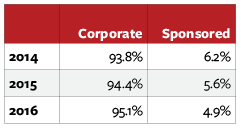
Per Axial data, sponsored (private equity) vs. corporate deal flow has remained fairly consistent over the past three years.
0517_LendersSeek_Table (1)
Sponsored deal flow has been spread evenly geographically with heavier activity in California, Texas, Florida and New York.

0517_SponsoredUSDebtDeals
Here are thoughts of three lenders regarding sponsors vs. corporations:

What’s the difference from your perspective when working with sponsors vs. corporations on a deal?george
“With sponsors, the positive is you’ve had someone who has probably already asked all of the right questions, therefore you can get very quick responses. That way it’s all packaged with a bow on it.
On the corporate side or the non-sponsor side, there is just a much heavier lift. It requires a high level of access to the business owner. I think there is also a large part of the market, on the non-sponsor side, that maybe doesn’t understand yet the total value proposition of this type of financing product. The company still might be of the mindset to call a budge bracket investment bank for an acquisition financing or my local bank down the street.”
– George Mueller, KKR Credit Advisors

What’s one factor that’s key to success in both both types of deals?gregg
“Aligning interests. The best thing about working with sponsors is that they are sophisticated and they are motivated. The worst thing about working with sponsors is that they are sophisticated and they are motivated. Because of that, we always strive for alignment of interest.
When you are lending to a non-sponsor, such as a family business, the business might have a 20 or 30 year orientation, which might not match with the lender’s shorter term orientation. In these situations, alignment is also of utmost importance.”
– Gregg A. Bresner, CION Investment Management


What’s your advice for sponsors and corporations when communicating with lenders? phil
“Behind every credit committee meeting, every credit memo, every credit approval or decline, every credit covenant and every credit agreement are human beings. Fostering good relationships with those human beings requires effort, consistency, communication and time, but fostering good relationships with your lender is always a good long-term strategy for every business owner, CEO, and CFO.
The most important thing for non-sponsored businesses to do is provide good financial reporting. They can avoid surprises by taking the time to regularly communicate and meet with the decision makers at the bank on a regular basis.”
– Phil Kain, Rush Street Capital

For additional information regarding Florida business sales, acquisitions and valuations, please contact Eric J. Gall at Eric@EdisonAvenue.com or 239.738.6227. Also, visit our Edison Avenue website at www.EdisonAvenue.com. To search for Florida Businesses for Sale: CLICK HERE

Wednesday, May 24, 2017

Article Review: Lessons Learned From Providing 13 Million+ Business Valuations | Divestopedia

 ,  

   
Key Takeaway: Michael Carter, CEO and president of BizEquity, talks about their simple and affordable online tool to value a lower mid-market business.
Lessons Learned From Providing 13 Million+ Business Valuations
Source: Sergey Khakimullin/Dreamstime.com
Other Key Takeaways:
  • All business owners want to know, but few really do know, the value of their business.
  • Valuation is both art and science. The science being comps and the art being feel for the company's industry, technology, growth prospects, etc..
  • Early stage venture valuation is more "art."  More mature company's valuation is more "science."
  • Pro-forma financials are critical as long-term revenue and EBITDA growth drives the premium around the valuation of the business.
  • BizEquity was born seven years ago on a flight from Buffalo to Philadelphia when Michael realized he could find home values on Zillow, car values on TrueCar, but where do you find your businesses value?
  • BizEquity is the only patented online business valuation tool (www.bizequity.com).
  • It is being used mostly by M&A advisors for their clients for tax planning, divorce cases, estate planning and insurance. 
  • $365 price point.

Listen here:


You can also get this Podcast by:

Article LINK


For additional information regarding Florida business sales, acquisitions and valuations, please contact Eric J. Gall at Eric@EdisonAvenue.com or 239.738.6227. Also, visit our Edison Avenue website at www.EdisonAvenue.com. To search for Florida Businesses for Sale: CLICK HERE

Thursday, May 18, 2017

Article Review: What Is My Electronic Manufacturing Business Worth? | Divestopedia

 ,    

Key Takeaway: Learn the best valuation methods to asses your electronic manufacturing services business before you sell.
What Is My Electronic Manufacturing Business Worth?
Source: tcareob72/iStock
Other Notes of Interest:
  • A broker should be able to give you a good valuation (I recommend finding a broker with a CBI and/or CM&AI/CM&AP who has been trained in valuation methods and has access to the necessary tools).
  • There are three methods typically used for valuations:  Asset, Future Earnings and Comparable Sales methodologies.
  • Future Earnings and Comparable Sales methodologies use multiples of Discretionary Earnings (DE) or Earnings Before Interest, Taxes, Depreciation and Amortization (EBITDA).  See graphic below for the DE Multiple.

The Average Multiple

What Is My Electronic Manufacturer Worth?

  • Calculating the value of your business requires a bit more sophistication than simply applying a multiple; hence, the need for a broker with valuation expertise.
  • Their are many different sizes of electronics businesses for sale and any given time.  See chart below for 2010 to 2015 transaction values by size.
What Is My Electronic Manufacturer Worth?


  • For assistance selling your electronics busienss, you have three options:  Use a Business Broker for deals under $1M, an M&A Advisor for deals between $1M and $50M, and Investment Banks for larger deals.  (Edison Avenue handles deals less than $50M).


For additional information regarding Florida business sales, acquisitions and valuations, please contact Eric J. Gall at Eric@EdisonAvenue.com or 239.738.6227. Also, visit our Edison Avenue website at www.EdisonAvenue.com. To search for Florida Businesses for Sale: CLICK HERE

Tuesday, May 16, 2017

Article Review: The Importance of Projections in Determining Business Value | Divestopedia

By  ,  
   
Key Takeaway: It's no secret that valuations are a big part of the business selling process, and it's a critical step. Weighing future projections is a key component to determining the fair market value.
The Importance of Projections in Determining Business Value
Other Takeaways:


  • Many involved in business transactions and appraisals avoid future projections and thus may render lower values for fear of litigation.
  • To assume a business will do the same as it did in the past is to assume the future.  Past performance must be analyzed by the appraiser and projected into the future. This look at the future gives the appraiser a view through the buyer's eyes, and that is what appraisal is all about.
  • Buyers will claim their future actions and success will stem from their hard work and they will not pay the seller for this. However, in reality, it is the seller that gave them the opportunity and the momentum to accomplish their perceived goals. 
  • If the appraiser cannot tell the future, then a buyer will not risk their money.  Therefore, they will want their money back very quickly requiring a higher capitalization rate or a lower multiple of earnings. That equates to a lower price.
  • Another reason for projected earnings is the moral obligation to the buyer. Assume research identifies the business lost its most profitable customer or that legislation was passed to adversely affect business performance.
  • Banks look at the company's financials and industry data to forecast what the company's ability to pay back a loan. If the bank forecasts the company will be able to service the debt, then the will approve the loan.
  • Temporary issues, e.g., the business suffered for a quarter due to construction in front of the business, may greatly impact past performance, but have a positive impact on future performance.
Conclusion:  To show projections to a buyer is potentially risky.  However, an appraisal is an opinion of value ordered by the seller. Your client is the seller and is paying for your opinion on the market value of their business. Prepare projections for the seller.

For additional information regarding Florida business sales, acquisitions and valuations, please contact Eric J. Gall at Eric@EdisonAvenue.com or 239.738.6227. Also, visit our Edison Avenue website at www.EdisonAvenue.com. To search for Florida Businesses for Sale: CLICK HERE

Wednesday, May 10, 2017

Article Review: The Four Main Reasons Acquisitions Fail | Divestopedia

Key Takeaway: Mergers and acquistions are hard enough without these surprisingly common reasons they can fail. Learn how to avoid these mistakes and strengthen your M&A strategy.
The Four Main Reasons Acquisitions Fail
Source: Jurij Boiko/Dreamstime.com
Two More Takeaways:
  • 70% to 90% of acquisitions fail to deliver the value the buyer anticipated. 
  • It is nearly impossible to build a world-class company on organic growth alone. 
The Four Failure Modes:

  1. Cost of the acquisition greater than the benefit.  Look beyond valuation at what you need to give up to complete the deal, execute the transition, etc..
  2. Not understanding what you bring to the deal.  Successful acquirers focus on the internal capabilities they can leverage to transform the target company. 
  3. Inexperienced in M&A. Studies show that more frequent acquirers have more success than less frequent acquirers.
  4. Lack of a Defined Process. Acquisitions fail when a company does not have a defined M&A process. 

Conclusion

Your best bet is to seek outside assistance during your M&A process (someone who perhaps has done several, or is a repeat advisor or buyer for this process). However, if you are performing your own acquisition, make sure you are avoiding these four common pitfalls and planning for the future. 
Full Article LINK

For additional information regarding Florida business sales, acquisitions and valuations, please contact Eric J. Gall at Eric@EdisonAvenue.com or 239.738.6227. Also, visit our Edison Avenue website at www.EdisonAvenue.com. To search for Florida Businesses for Sale: CLICK HERE

Monday, May 1, 2017

The Value of a Valuation | Divestopedia

The Value of a Valuation Source: phongphan5922/iStock

Key Takeaways:

Takeaway 1:  Take the time to understand the factors that drive the valuation of a company.
Takeaway 2:  Understand what dictates the multiplier attributed to the valuation of a company to answer the quesiton, "What is my business worth?"
Takeaway 3:  Companies in industries that are in high demand will command higher multiples vs. companies in industries in out-of-favor sectors.  Healthcare, education, technology and business support & service are high demand.  Oil & gas and construction are low demand.
Takeaway 4:  Companies with high potential growth rates will command a higher multiples.  A business plan is the best tool to project and defend plans for future growth.
Takeaway 5:  The buyer's perceived risk plays a large part in what they are willing to value the business.  Talk to me about the 15 risk factors that can devalue your business. 
Takeaway 6:  Try to find strategic buyers.  Strategic buyers generally look for larger projects, $1M+ EBITDA, that are a great fit for their existing customer base, product line, or an untapped geographical region, i.e., they believe they can easily scale up revenues while simultaneously streamlining back office support.

Article LINK


For additional information regarding Florida business sales, acquisitions and valuations, please contact Eric J. Gall at Eric@EdisonAvenue.com or 239.738.6227. Also, visit our Edison Avenue website at www.EdisonAvenue.com. To search for Florida Businesses for Sale: CLICK HERE

Tuesday, April 25, 2017

The Only Valuation Method that Really Matters | Divestopedia

By  ,  

Takeaway: There are many ways to do a business valuation, but this is the one that truly matters.
The Only Valuation Method that Really Matters
Source: FeelPic/iStock
I have a secret to tell. It’s something I haven’t shared with many people, but now it feels appropriate to do so.
Most people know of me as just this random M&A advisor who writes a few blog posts on buying and selling businesses, but there’s a little more going on behind the scenes.
I recently confirmed something about myself that I had suspected for a long time: I have the ability to read minds. (Disclaimer: this is only in the context of a buyer considering the purchase of a business. Unfortunately, it doesn’t work so well with my wife). This power is particularly strong when it comes to prospective buyers determining the valuation of a business.

Generally Accepted Valuation Approaches

Any professional business valuator will tell you that there are three primary valuation methods:
  • The Income-based Approach — quantifies the net present value of future cash flows associated with ownership of the equity interest or asset.
  • The Market Approach — determines fair market value by reviewing actual valuation metrics on comparable companies and transactions.
  • The Asset-based Approach — uses the current value of a company’s tangible net assets as the key determinant of fair market value.
As a Chartered Business Valuator, I am well-versed in the application of these methods and have professed their worthiness as valid approaches over my career. But my ESP told me that business buyers just didn’t give a damn about the valuation reports that I was preparing for my sell-side clients. Also, mental telepathy tells me that different buyer types place different values on prospective targets, so a one-size-fits-all approach is not appropriate for business valuations.
If you don’t believe me, try this out. Before selling your business, hire a business valuator to prepare an expensive valuation report. Give that report to a prospective buyer and tell them to pay that price noted within. Nine out of 10 times, the buyer throws the report in the garbage and provides you a different offer that they think is fair. My advice is not to waste your money on a valuation report, but rather to find an experienced M&A advisor to provide you with their thoughts on who is a likely buyer and what price they can get in the market. If the minimum price meets your expectations then move ahead and trust that your advisor will do their best to get more.

Business Buyer Valuation Method (the Only Method that Matters)

With my mind reading talents, I feel it is my obligation to tell entrepreneurs how buyers actually value a business. Here it is. The price that a business buyer will pay is dependent on three factors:
  • who is the buyer;
  • how the specific buyer will structure the payment terms of the negotiated purchase price; and
  • does the check that the buyer has to write provide an adequate return on equity.
Candidly, when selling a business, determining these three factors is the only business valuation method that really matters. Here are steps to estimate the purchase price from different prospective acquirers using the business buyer valuation method:
  • Determine who the most likely buyer is for your business;
  • Prepare an achievable cash flow forecast that the prospective buyer will be able to realize (only consider growth and synergies if the buyer will be able to realize them);
  • Determine how the specific buyer will structure the transaction (i.e. all cash, partial cash with financing, vendor financing, earnouts, etc.); and
  • Based on the cash flows of the business and the buyer’s equity check, determine a valuation range that meets the buyer’s required return on equity.

Buyer’s Guide

I know you’re probably thinking, “How the hell am I suppose to know the answers to each step in the business buyer valuation method above?” Don’t worry, I am here to provide you with a guide using my mentalist abilities. Let’s take a look at each buyer:

Multinational Corporate Acquirer

Most multinational corporations can pay all cash for a mid-market transaction if they chose to. They also have the lowest cost of equity hurdles to overcome given their ability to quickly expand the acquired company’s market through their own distribution channels. Based on both of these factors, multinational acquirers will pay a higher purchase price than other prospective buyers.
Forecast: prepare projections that have aggressive (but reasonable) growth numbers, based on your knowledge of the buyer. Now cut your projections in half, because I know you have still been too aggressive (I’m a mind reader, remember?) Also, don’t forget to incorporate the costs that would be required to meet the growth targets (i.e. do you need to build corporate infrastructure to reach your target?).
Deal Structure: all cash
Return on equity: 15%–20%

Mid-sized Strategic Acquirer

A mid-sized strategic acquirer might be able to find some synergies, but not to the extent of multinational acquirers. It is also most likely that a mid-sized strategic acquirer will require financing to complete the acquisition. So, the purchase price will be limited by the acquired company’s ability to service debt obligations while remaining in line with all bank covenants.
Forecast: prepare projections that you would prepare for your business as if you will continue to run it, but consider all the cost synergies that a strategic buyer will enjoy from combining the two businesses.
Deal Structure: this buyer will obtain a conservative level of bank financing available from secured and cash flow lenders while making sure to maintain all debt covenants. The deal will also include vendor financing or earnouts depending on how much growth is baked into the forecasts.
Return on equity: 20%–30%

Private Equity, Family Office and Private Investors

Financial buyers are primarily concerned with achieving returns for their investors. They bring financial engineering expertise and look for experienced management to lead the operational charge. The abundance of cheap capital has allowed these buyers to compete with strategic acquirers on valuation levels.
Forecast: Similar to the forecasts prepared for mid-sized strategic acquirers, prepare achievable projections for your business — but don’t consider any cost synergies. A financial buyer will try to aggressively grow your business through acquisitions and other means, but they will not be willing to pay you for any of the future growth realized through initiatives that they execute.
Deal Structure: these buyers will obtain aggressive levels of bank financing available from secured and cash flow lenders. The deal will also include seller financing or earnouts because this will increase the financial buyer’s return on equity. In the deal structure, consider the maximum amount of seller financing and earnout that you are willing to accept, because financial buyers are going to push for the highest level that they can negotiate.
Return on equity: 25%–35%

Develop Your Valuation Mind Reading Skills

My sixth sense regarding business valuation is not something I was born with. I developed these skills over time and numerous interactions with prospective buyers. As business owners, as opposed to business valuators, I don’t expect you to reach my level of clairvoyance. Just follow the formula that I have presented and you will be able to read the mind of any prospective business buyer that you encounter.
Article LINK

For additional information regarding Florida business sales, acquisitions and valuations, please contact Eric J. Gall at Eric@EdisonAvenue.com or 239.738.6227. Also, visit our Edison Avenue website at www.EdisonAvenue.com. To search for Florida Businesses for Sale: CLICK HERE

Monday, April 10, 2017

Should My Accountant Do My Business Valuation? | Divestopedia

Takeaway: Accountants are a vital part of business functions, but are likely not the best choice for business valuation.
Should My Accountant Do My Business Valuation?
Source: Artystarty/iStock
I run a split practice. I specialize in both transactional advisory and business valuations. In my transactional advisory practice, it amazes me the number of times clients have come knocking on my door to discuss the sale of their business and present me with a ‘valuation report’ that has been prepared by their accountant.
What’s wrong with this, you say? Surely your accountant, given their knowledge of businesses and their accounting skills, should be perfectly suited to valuing a business? Based on the many valuation reports I have seen that have been produced by accountants, I would strongly disagree.
Many of the accountant-produced valuation reports I’ve come across just don’t stack up. In fact, many of them are not valuation reports at all — they’re simply calculations (i.e., net profit x 3 = value) — if your accountant has sold you something like this before, ask for your money back!
Here are the reasons why you should never ask your accountant to value your business:

Your Accountant Doesn’t Sell Businesses

I am of the strong opinion that one of the most important pieces of knowledge a valuer should have is an understanding of the ever-changing business sales marketplace, and accordingly strong knowledge about what prices business buyers will pay for what businesses.
As a case in point, I recall a recent accountant-produced valuation report which stated that a particular manufacturing company (with revenues of approximately $5 million) was worth 5x net profit plus the written down value of all physical assets. I can assure you that a business of this type would never transact in the marketplace for anything close to this — hence, the valuation report was a complete waste of money.

Your Accountant Most Likely Doesn’t Complete Valuations Very Often

Trust your accountant to do what they’re good at — let them calculate your EBITDA (there are some adjustments they can help you with), your present inventory value, etc. Most accountants are specialists in taxation, so unless your accountant is a specialist in business valuations, you should engage someone else to value your business.
I would never ever attempt to advise you on your taxes — it’s not what I do! Unfortunately, many accountants in the hunt for fee revenue will take on engagements to complete business valuations, even though it is not their area of expertise, and not something they do very often.
Unfortunately, this means a great deal of the accountant-produced valuation reports I’ve seen clearly demonstrate that the accountants responsible for them didn’t even pass Valuations101. Why waste your money?

Your Accountant Is Not Independent

Many businesses and individuals have used the same accountant for years and years. Given the length of the relationship between client and accountant, accountants cease to be an independent, arm’s length advisor and instead become an advocate for their client. Most times, this works exceedingly well to the benefit of the client. However, when it comes to valuing your business, you should engage someone who can act at arm’s length and provide independent advice.

So Who Should You Engage to Value Your Business?

I’ve found the best business valuations are produced by practitioners who specialize in completing valuations. These practitioners have specialist knowledge and expertise in the field of business valuations, meaning their advice is grounded in experience and logic. If you needed heart surgery, you wouldn’t use your GP — you’d go to a specialist. The same applies to business valuations!
Valuers should also have a well-rounded knowledge on the current state of the business sales marketplace. This means they should know how different businesses are transacting in the marketplace, and on what prices and terms business buyers and sellers are completing transactions. Understanding the business sales marketplace is vital to producing logical and defendable valuations that stand up in the face of current market conditions.
Further, it pays to know that there are many specialist business valuers in the market who have unique expertise in valuing businesses within specific industries. If, for example, you own a pharmacy, it would be prudent to engage a specialist pharmacy valuer who understands the nuances of businesses in the pharmacy industry and what impact these factors will have on a business’ value.
So ask yourself this question: does your accountant tick all those boxes?

For additional information regarding Florida business sales, acquisitions and valuations, please contact Eric J. Gall at Eric@EdisonAvenue.com or 239.738.6227. Also, visit our Edison Avenue website at www.EdisonAvenue.com.

To search for Florida Businesses for Sale: CLICK HERE

Tuesday, March 14, 2017

7 Fundamentals to Due Diligence You Need to Know | Divestopedia

By  , 
Takeaway: Being open about your business practices and financial statements can lead to a better takeaway for both the buyer and seller.
7 Fundamentals to Due Diligence You Need to Know
Source: Info40555/Dreamstime.com
According to Bizbuysell.com, there were a total of 1,840 businesses transactions that took place worldwide during the first quarter of 2016. Businesses were either bought and sold or mergers and acquisitions took place in that first quarter. People buy and sell or merge businesses for different reasons, but whatever the reasons, there are always a wide variety of preliminary activities that must take place prior to closing the deal. In almost all cases, an attorney who is fluent in due diligence for mergers and acquisitions is required to ensure that the transaction takes place based on the laws that have been put into place by FINRA or other regulatory agencies.

1. Historic and Projected Financial Information

Historic Information

The seller should be providing financial documents for the past three years. The buyer will need to perform due diligence concerning the company’s historical financial information and supporting documentation.
The seller will need to provide documents for the buyer to perform an assessment of the company’s financial statements so they can make note of any financial trends, spikes or decreases in sales and revenue, consistencies or inconsistencies in cash flow activity, the company’s current debt, receivables and other assets, as well as all other aspects of the company's financial performance.

Projected Information

In addition to performing due diligence on the historical financial information, the buyer will also need to perform due diligence on any future financial activity as well. Carefully checking to ensure reasonable financial projections of the company’s future performance were made. Some of those areas involve whether or not the projections are based on reasonable assumptions whereby a clear path to achieving those results is laid out and linked to the actual financial activity in a practical, succinct manner.
  • Is the projected financial information sound and believable?
  • Were the documents succinct?
  • How much working capital is necessary to continue running the business beyond its current state?
  • Are there additional capital expenditures or other required investments that need to take place to ensure the future growth of the business?

2. Technology Developments and Intellectual Property

The seller will need to provide the buyer's attorney with information about any current or pending intellectual property, technology developments, copyright and patent ownerships that the company may have.
If the company has patent applications and potential trademarks, the buyer should ensure that the appropriate registration has taken place. When materials are used in marketing or technological advances, the company must have the rights and control the copyright, or risk lawsuits. If they haven't, it could be a risk for the buyer who will take on any liability based on prior violations.
Trade secrets are vital to the success of some companies, so as the seller, you'll need to ensure that the secrets have been preserved appropriately and other companies' secrets have not been infringed by your company and be able to prove that to the buyer.

3. Customers and Revenue Streams

Before purchase, the seller will have to detail the various revenue streams of the business. This includes the company's satisfied customers, and what they purchase. The buyer should have a grasp of who the customers are as well as how revenue is generated by these customers especially the top 20 percent who will account for much of the business.
Another consideration is the satisfaction of the customers after a change in ownership. Are there going to be problems with new ownership that will impact the business' revenue going forward?
Along with evaluating customer loyalty and spending habits, the seller will be giving the buyer information about the backlog of issues. Are there warranty problems that are not being handled properly? Do there seem to be a high level of exchanges and refunds being issued? The seller should already have this information and be able to tell the buyer why there were problems.

4. Contract Agreements and Insurance

A review of all pending and active contracts and agreements should be a part of the due diligence process as well as a review of insurance coverage.
The key areas include some of the following:
  • Outstanding loans, personal guarantors, and note payables
  • Outstanding customer and vendor contracts
  • Partnerships, joint venture, or operating agreements
  • Outstanding or pending Settlement agreements
  • Equipment or vehicle lease agreements
  • Independent contractor and Employment agreements
  • General liability and Worker’s compensation insurance
  • D&O / E&O and Key man insurance
  • Intellectual property insurance
  • Vehicle insurance
  • Health insurance
  • Umbrella policies

5. Staff and Key Management

The buyer will need to perform diligence activity for all staff, independent contractors, and key management. This should include looking into scheduled pay raises, equity shares, profit distributions, 401(k), commissions, bonuses and other employment related issues. This means the seller will need to have opened their human resource files and be willing to have a buyer comb through the documents.
Along with the functionality of the human resources department regarding compensation, there should be a detailed audit of the history of labor disputes. If there's even been a threat to stop working for any reason, that could be a red flag, but the buyer will need to look into the issues that caused the employees to be disgruntled.

6. Legal and Compliance

One of the biggest headaches for a buyer can be legal tangles, which include any current, pending or settled litigation, arbitration or other proceedings. Any compliance- or regulation-related issues can be a problem, too. This is where the buyer's attorney should be forecasting the result of the litigation as well as investigating claims and threats against the company. The seller can help by being as forthcoming as possible and talking to their own attorneys about the legal future of any claims.
With detailed due diligence procedures for acquisitions, a seller can avoid serious legal problems in the future by looking at the prior, current, and future potential for legal threats. There might even be matters in arbitration at the moment that could resolve into a problem for the new owner. In some cases, a buyer might come back and sue a seller for fraud if they weren't forthcoming with information regarding fraud.

7. Tax Issues

It’s important to perform a tax due diligence to determine whether the company has any tax liability issues. This process should include a review of tax returns that have been filed within the past five years including the federal, state, and local returns. The buyer's accountants and attorneys should be checking for net operating losses. Credit carryovers should be investigated to ensure that the change in ownership won't impact the relationship with the creditor.
If there have been agreements, waivers or tax communications with the IRS, the new buyer should understand exactly what that means for acquiring the business. If there have been settlement agreements with the IRS or other agencies, the seller will want to let the buyer know that those will not impact the new ownership negatively, and might not carry over to the new buyer.

Final Words

Due diligence in merger and acquisitions requires that a substantial amount of activities take place from both sides prior to making a full commitment to the transaction. It’s a means for the buyer to do some fact-checking, so that he or she is fully aware of what is actually being purchased. By carefully planning these and other related activities for the due diligence in mergers and acquisitions process, the buyer will feel confident in his decision and will be prepared to proceed with the purchase of the business. The seller will be able to say that they provided all the information the buyer needed to make a sound decision.

For additional information regarding Florida business sales, acquisitions and valuations, please contact Eric J. Gall at Eric@EdisonAvenue.com or 239.738.6227. Also, visit our Edison Avenue website at www.EdisonAvenue.com.

Monday, December 5, 2016

How to Prevent Failed Mergers | Axial

By  | 
Private equity-driven M&A deals have an embarrassingly low success rate. This is understood within the industry, at least on a colloquial level — it’s commonplace to hear off-the-cuff numbers that 50% of proposed deals fall through, even when both sides agree it’s a money maker.
Except it’s worse than that. The Harvard Business Review suggests the real figure is closer to 90%. A McKinsey study concluded the failure rate was between 66% and 75%. (This isn’t an isolated product of the American regulatory environment, either; the Global Times reported that only 2,500 of about 7,000 declared deals were completed in China in 2014, for a failure rate of 64%.)
Of course, it’s not enough to complete the merger. There are still businesses to run, products and services to produce, and customers to satisfy. One KPMG study found that 83% of M&A deals fail to boost shareholder returns. Eighty-three percent!
The number one killer of M&A deals is a “failure to integrate effectively,” according to a survey of executives by Deloitte. Fifty-five percent of respondents cited integration as a top area of concern, and 54% called integration a top area of concern before pursuing a deal. This means that firms know ahead of time that integration is a huge challenge, but two out of three mergers fail anyway.
Why is integration such a problem? Some of the problems are strategic, i.e., how the firm approaches integration and identifies success. Others are tactical, such as how and when to inform staff of key decisions.
Start Thinking About Integration Yesterday
Sage Harrison is a principal at private equity firm Evolve Capital, an Axial member, which specializes in leveraged recapitalizations. “Because we’re partnering with founders, the integration plan is sketched out while we’re in diligence and almost always involves getting a CFO involved in the company from day one while assessing the human capital needs and defining the growth strategy.”
At a fundamental level, mergers occur because there is an opportunity to realize some yet-untapped value. “Growth is our number one priority,” says Harrison. But realizing (and maximizing) that value requires buy-in from everyone, and planning for that buy-in should start just as early as planning finance or legal.
“We expend a lot of effort refining the growth strategy. This involves analysis around the company’s brand, target customers, competition, and sales,” says Harrison. “Often times the companies we invest in have a very strong product or service but everything customer facing needs work.”

Integration means more than just running through standard M&A processes, checklists, PowerPoint templates, and risk-avoidance lectures. Take this opportunity to practice some empathy for all of those whose lives are about to change in uncertain ways. Make sure you understand if/how the IT systems can talk to one another; effective integration relies on effective communication between humans and systems alike. The earlier a firm thinks strategically about these issues, the more prepared it will be when it comes time to execute.
The nice thing about starting early is you can afford to start simply. Harrison’s basic philosophy: “Focus on the easiest things that will produce the biggest impact first.”

Businesses Are Made of People, Not Numbers
Growing a business means paying attention to the financials, but also understanding that those numbers reflect the efforts and passion of real people. Shareholders, board members, directors, employees, vendors, customers — these people are the real building blocks of any successful M&A.
For example, the owners and/or founders of the target firm will have to yield some power — a stressful adjustment. Customers will worry about changes to the products and services they’ve become accustomed to. Employees fear job loss or the cultural impact of new leadership. “Many employees associate ‘synergies’ with ‘people getting fired,’” says Brandon Hinkle, vice president at Kovitz Private Holdings, an Axial member.
“Many people are generally afraid of the unknown, and flight risk must be thought through,” says Hinkle. “Pride, ego, fear, jealousy, excitement, anxiety — these are all emotions you’ll likely see from folks during most integrations. If a few key folks become disenchanted, the machine can fall apart.”
Know How to Build on Success
Effective M&A teams know how to avoid operational missteps, build on success, and keep the good times rolling.
“I’m a huge believer in momentum,” says Harrison. “You can feel it while watching or playing sports but you can also feel it inside of a company.” Momentum means hitting goals and generating enthusiasm about the project in an uncontrived way. It means elevating the collective performance to a level beyond a group of individuals. “When we invest in a company, everyone involved believes it’s a catalyst for growth. It’s a great time to reexamine the strategy, the brand, and the sales effort.”
The first step is creating a firm direction and maintaining the focus to carry it out as planned. Everyone in the C-Suite has a role to play in an M&A transaction; leadership is responsible for providing strategic vision, executing on details, mapping out the integration plan, and more.
The employees also “need to buy in to help effectuate the integration successfully,” stresses Hinkle. Prior to close, “keeping the integration on a need-to-know basis to prevent the rumor mill from swirling is usually a good idea.” Once the integration is announced, employees need to hear that their jobs are safe and their work is appreciated (assuming it’s the truth). Hinkle suggests that “employment agreements and non-competes can provide helpful piece of mind.” Everyone should expect to work towards — and share in — the new vision and successes.

Article LINK
For additional information regarding Florida business sales, acquisitions and valuations, please contact Eric J. Gall at Eric@EdisonAvenue.com or 239.738.6227. Also, visit our Edison Avenue website at www.EdisonAvenue.com or my personal website at www.BuySellFLbiz.com.